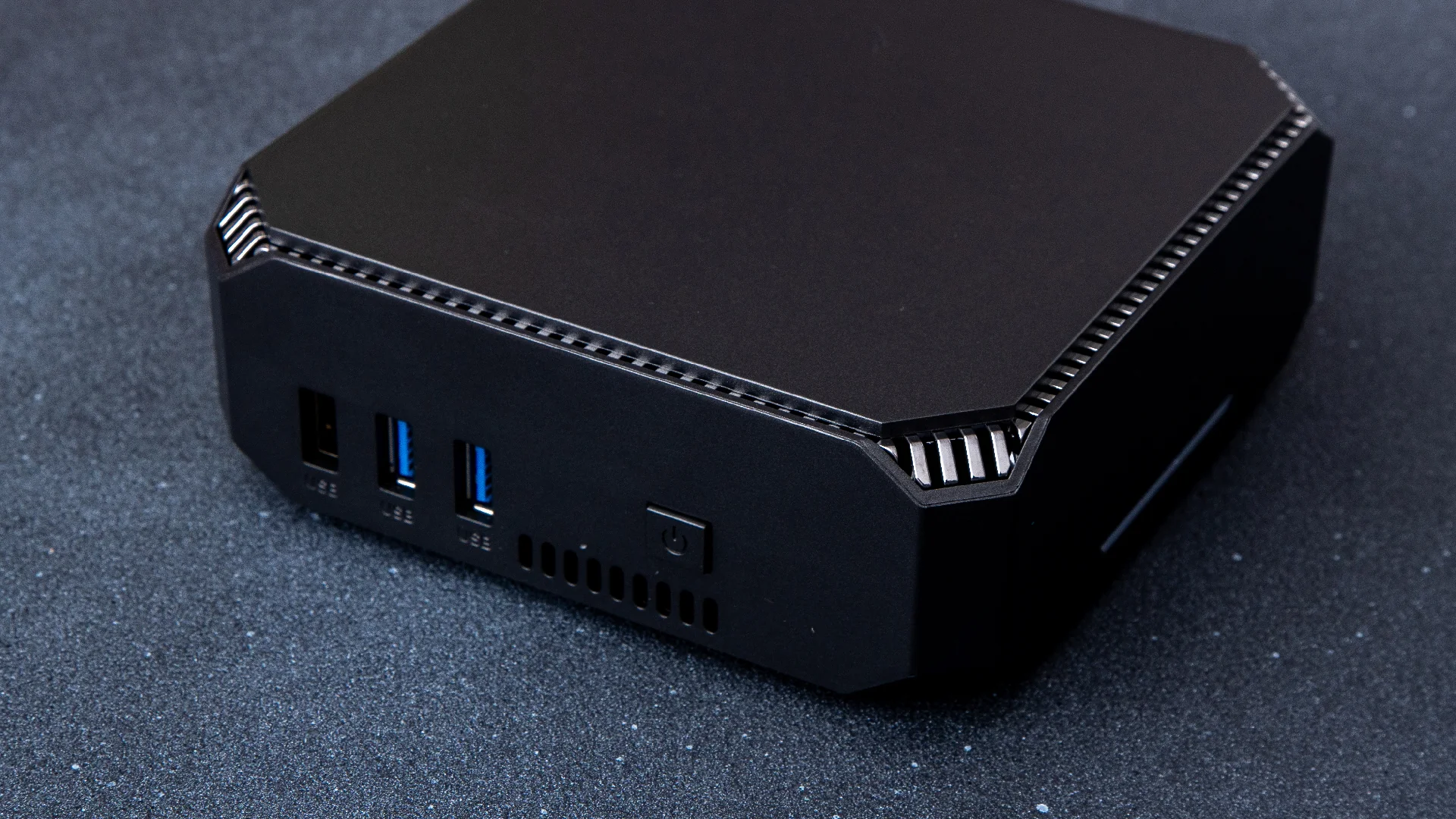
AMD's 'Halo' Chip Brings Powerful AI to Your Own Computer
Almost all of the AI we use today runs in the cloud. When a student asks a chatbot a question, the request travels to a company's data center, gets answered there, and comes back. AMD is betting that a lot of that work is about to move closer to home. At CES 2026 in January, the company described AI as something that will be "woven into every level of computing," and its high-end "Halo" platform shows what that looks like at the top end: a desktop that runs large AI models entirely on its own hardware.
A Desktop That Runs AI by Itself
The chip at the center of it is the AMD Ryzen AI Max+ 395, codenamed "Strix Halo." It pairs 16 processor cores with a large integrated graphics chip and a dedicated NPU, a neural processing unit built specifically for AI work, rated at roughly 50 trillion operations per second.
The headline feature, though, is memory. The platform offers up to 128GB of unified memory shared between the processor and the graphics, and most of it can be used for AI. That is enough to run very large language models on the machine itself. AMD says the platform can handle models up to 200 billion parameters, and independent reviewers have run 70-billion-parameter models such as Llama 3.1 directly on the chip. The "Ryzen AI Halo" developer desktop sells for around $3,999.
Why Local AI Is Different
Running AI on a machine you own, rather than in someone else's data center, changes a few things that matter to schools:
- Privacy: nothing has to be sent to an outside company. For a school handling student data, keeping that information on its own devices is a meaningful difference.
- Cost: once you own the hardware, there are no per-student or per-use cloud fees.
- Reliability: it keeps working without internet, and it does not vanish when a provider changes its terms or its price.
- Control: you decide which model runs and when it changes, rather than waking up to a different one.
The trade-offs are real too. This hardware is expensive, the very largest models still live in the cloud, and getting good results locally takes some setup. Tools like LM Studio are making that easier, but it is not yet a plug-and-play classroom experience.
Local AI means the model runs on a machine you own, and the data never has to leave the room.
The Direction, More Than the Device
A $3,999 desktop is not a classroom purchase, and that is fine. The device is not the point; the direction is. AMD says it has roughly doubled to more than 250 AI-capable PC platforms in a single year, and the same kind of AI hardware is working its way into ordinary laptops.
Within a few years, "AI PC" will simply mean "PC," and some of the AI that now requires a cloud account will run on the school's own machines. For student-data privacy in particular, that is a promising path: student work could be analyzed or supported by AI without ever being uploaded anywhere. It is a development worth watching closely, even if it is not one to buy into yet.
AI Is Moving Closer to Home
For years, the story of AI was bigger and bigger data centers. The Halo chip is a sign that the story is also running the other way, onto the devices right in front of us. For schools, that points toward a future with more privacy, more control, and less dependence on any single cloud service.
The hardware is not ready for most classrooms today. But the direction is set, and it is a good one to understand before it arrives.
- AMD unveils new AI PC processors for general use and gaming at CES, TechCrunch, January 2026
- AMD Ryzen AI Halo for AI Developers, AMD
- AMD challenges Nvidia's DGX Spark with $3,999 Ryzen AI Halo, packs 128GB of unified memory, Tom's Hardware, 2026
- AMD Powers Next-Generation Agent Computers with New Ryzen AI Halo Developer Platform, AMD, 2026